
Imagine a quiet morning in a sun-drenched village. The rhythmic thud of wooden stamps against fabric creates a heartbeat for the community. We once watched an artisan dip a carved teak block into natural indigo.
They pressed it firmly onto soft cotton with a grace born of generations. That single moment captures the soul of our hand block printed kurtis. It transforms simple textiles into living narratives of devotion.
These garments serve as vessels of cultural history. They carry the whispers of ancient traditions directly to your wardrobe. When you wear these pieces, you are not merely choosing an outfit.
You are honoring the steady patience of the craftspeople who poured their spirit into every pattern.
We invite you to explore this poetic journey with us. Each thread tells a story of heritage that we are deeply honored to share. By choosing these items, you become a vital part of a legacy.
This legacy celebrates the beauty of human touch in a world of mass production.
Key Takeaways
- Discover the deep cultural roots behind traditional textile arts.
- Understand the meticulous process of creating unique patterns by hand.
- Learn how your fashion choices support sustainable village craftsmanship.
- Connect with the emotional narrative woven into every piece of fabric.
- Celebrate the timeless elegance of heritage-inspired apparel.
The Soul of Artisanal Craftsmanship
Our ancestors had a special way of making textiles. They left delicate imperfections that machines can’t match. This makes each garment unique and special.
The Heritage of Indian Textile Traditions
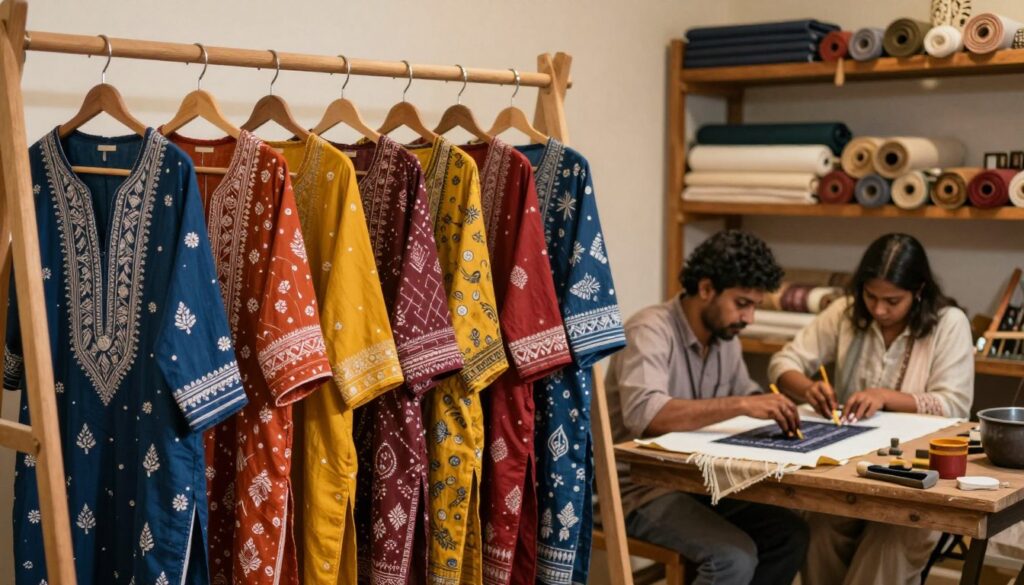
Our story starts with India’s rich textile history. For years, skilled artisans have used artisanal block printing. They turn simple fabrics into works of art.
This tradition is more than just pretty designs. It’s a way to keep our culture alive. It connects us to our past.
Why We Choose the Human Touch Over Machines
We prefer the human touch over machines. We love the unique colors and patterns that people create. This makes our handmade indian fashion truly special.
Choosing people over machines has many benefits:
- Unmatched Character: Each print is unique, showing the artisan’s touch.
- Sustainable Impact: Traditional methods use less energy and chemicals.
- Empowering Artisans: Your support helps keep artisanal block printing alive.
- Lasting Quality: Our pieces are made to last, getting better with time.
Understanding the Art of Hand Block Printed Kurtis
Creating hand block printed kurtis is like a poetic dance. It’s a mix of the artisan’s skill and the fabric’s life. This old method turns simple fabrics into stories on cloth.
Defining the Essence of Block Printing
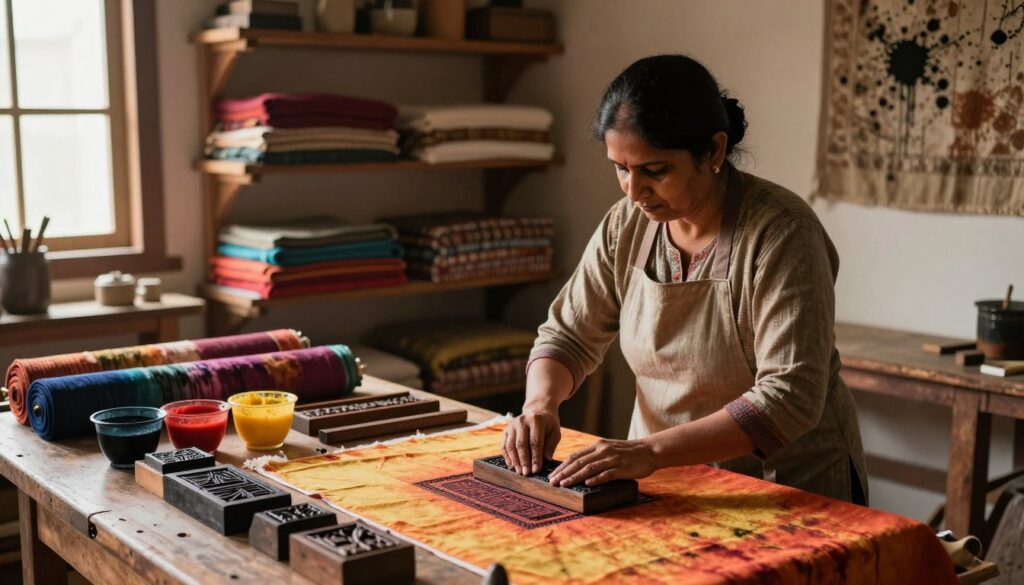
Block printing is a mix of precision and patience. We use wooden blocks to make designs on fabric. This makes each piece unique, unlike mass-made items.
The process needs a deep bond between the printer and the fabric. We press hard to make colors deep and alive. This care is what makes women’s block print clothing beautiful.
The Cultural Significance of Traditional Indian Kurtis
Traditional Indian kurtis connect our past and present. They are more than clothes; they show our heritage and who we are. Wearing them keeps our ancestors’ stories alive.
“The beauty of the handmade lies in its imperfections, which are the fingerprints of the artisan.”
These clothes hold a special place in our community. They stand for slow fashion and respect for the makers. By choosing them, we honor Indian craftsmanship.
Preserving Ancient Techniques in Modern Fashion
We aim to keep these old methods alive in today’s fashion. We mix old patterns with new styles. This keeps women’s block print clothing a must-have in every closet.
Supporting these artisans keeps our culture alive. The table below shows how our handcrafted items differ from machine-made ones.
| Feature | Hand Block Printing | Machine/Screen Printing |
|---|---|---|
| Production Method | Manual block stamping | Automated rollers |
| Design Uniqueness | High (Unique variations) | Low (Uniform repetition) |
| Environmental Impact | Low (Natural dyes) | High (Synthetic chemicals) |
| Artisan Skill | Mastery required | Minimal oversight |
Preparing the Canvas: Selecting Fabrics and Natural Dyes
The start of our art is mixing natural fibers with earthy colors. We see each fabric as a canvas ready for change. This first step blends sustainability with elegance, showing respect for both the maker and the wearer.
Choosing Breathable Cottons and Silks
We pick materials that feel like skin, letting the body breathe. Our focus is on organic cottons and silks that shine naturally. This choice makes our women’s block print clothing comfy and stylish.
We check the fabric’s weave and texture before printing. The quality of the fabric affects the design’s life. Pure, untreated fabrics soak up our natural dyes beautifully, unlike synthetic ones.
Sourcing Earth-Friendly Pigments
We choose pigments from nature, using roots, flowers, and minerals. This way, we make block printed tunics with true, earthy colors. It’s a way to honor Indian heritage.
Our method avoids harmful chemicals, keeping our water clean. Each color we mix tells a story of the land. This conscious selection makes our clothes timeless.
The Ritual of Carving: From Wood to Intricate Pattern
The soul of our craft is in the chisel’s rhythmic dance on wood. Before color hits the cloth, an artisan brings wood to life. They turn raw material into a carrier of heritage.
This process is the heart of artisanal block printing. It’s a slow, meditative act that connects us to nature.
The Role of the Master Woodcarver
The master woodcarver is our silent designer. They work with seasoned teak or sheesham wood, known for its quality.
Each chisel stroke shows years of hard work. The carver must know how the wood will take dye. This ensures every design is sharp and clear.
- Precision: Every line is carved to a specific depth to ensure even ink distribution.
- Patience: A single complex block can take days of meticulous labor to complete.
- Heritage: Techniques are passed down through generations, preserving the integrity of the craft.
Translating Nature into Geometric Motifs
Our designs come from India’s lively landscapes. We turn flowers, vines, and leaves into unique block print designs.
The carver makes these natural shapes into simple, geometric patterns. This makes the design repeat well on fabric, creating a nice rhythm.
We mix traditional geometry with nature’s shapes. This makes our textiles timeless. These unique block print designs tell stories carved into wood, ready to be shared through artisanal block printing.
Mastering the Technique: A Step-by-Step Guide to Printing
We invite you to see the quiet dance of creation in our textile heritage. This process turns raw materials into block printed tunics with the soul of our artisans. Every move is careful, making sure the final garment tells a story of patience and skill.
Setting Up the Printing Table
The start of our work is setting up the printing table. We stretch the fabric tight on a long, padded surface for a flat canvas. This is key for crisp, clean impressions in our unique block print designs.
Applying the Block with Precision
With the fabric ready, we dip the carved wooden block into pigment. We press it firmly onto the cloth, applying even pressure for the design. This needs a steady hand and knowing how the fabric takes the dye.
Ensuring Alignment and Consistency
Our quality standard is consistency. We use guide marks for perfect pattern alignment. This strict alignment avoids gaps, making the art flow smoothly across the fabric.
The Importance of Rhythm in the Printing Process
Printing is a rhythmic dialogue between the artisan and the cloth. As we move, our bodies find a natural rhythm. This harmonious flow makes our block printed tunics feel alive and real.
| Process Stage | Primary Focus | Desired Outcome |
|---|---|---|
| Table Preparation | Surface Tension | Smooth Canvas |
| Block Application | Pressure Control | Sharp Impression |
| Pattern Alignment | Geometric Accuracy | Seamless Design |
| Rhythmic Pacing | Artisan Movement | Consistent Quality |
Mastering these steps lets us celebrate the beauty of unique block print designs in every piece. We believe that when the artisan is in sync with the material, the result is timeless elegance.
The Alchemy of Color: Mixing Pigments for Authentic Hues
The magic starts when raw pigments meet nature. We see mixing colors as a sacred dialogue with the landscape. By blending earth powders, we get the true, soulful colors that define us.
Creating Traditional Color Palettes
Our palettes come from our cultural heritage. We use the deep ochres of sun-baked soil and the rich indigos of the monsoon sky. We also use the soft madder reds of desert sunsets.
These colors are carefully curated to match our cotton and silk fabrics. We believe in the beauty of organic tones. Each dye batch is unique, showing the season and source of the materials.
“Nature provides the palette, but the artisan provides the soul. When we work with natural dyes, we are painting with the very essence of the land.”
The Chemistry of Natural Mordants
Getting true hues needs more than pigment; it needs natural mordants. These agents bind the color to the fabric. Without them, the colors would fade quickly.
We use substances like alum and iron filings to fix our colors. This process makes the fabric hold the dye well. By understanding this chemistry, our textiles last long, just like the traditions they carry.
| Natural Source | Resulting Hue | Mordant Used |
|---|---|---|
| Indigo Leaves | Deep Blue | None (Oxidation) |
| Madder Root | Vibrant Red | Alum |
| Pomegranate Rind | Soft Yellow | Iron |
| Catechu Wood | Earthy Brown | Alum |
Drying and Curing: The Patience Required for Perfection
The journey of a hand-printed textile doesn’t end at the printing table. It just starts a quiet maturation period. We see this as a sacred ritual, where the fabric rests. This lets the pigments bond deeply with the fibers.
This slow, deliberate approach is the secret to our unmatched longevity. It makes our handcrafted garments last longer.
The Role of Sunlight in Fixing Colors
Sunlight is a powerful, natural catalyst in our workshop. After printing, we lay the fabric out in the sun. The warm, golden light is essential for the natural dyes to settle into the fabric.
We watch the light carefully to make sure the colors get their full beauty. This solar curing makes the colors stay bright for years. It shows our belief in nature’s power for lasting beauty.
Washing and Steaming to Lock in the Design
After curing, we move to washing and steaming. This step removes extra pigment and sets the design. We use gentle, traditional methods to keep the fabric soft and breathable.
Steaming is the final step, sealing the motifs into the fabric. This careful process makes each piece a durable work of art. We’re proud of this patience, knowing it honors both the artisan and the wearer.
| Process Stage | Primary Action | Expected Outcome |
|---|---|---|
| Sun Curing | Natural Oxidation | Color Stabilization |
| Gentle Wash | Removing Excess Dye | Fabric Softening |
| Steam Setting | Heat Fixation | Design Permanence |
Identifying Authentic Handcrafted Kurtis
Look closely at the fabric. Every tiny variation tells a story of human dedication. True artistry is about the living energy from the artisan’s hand to the cloth. Choosing handcrafted kurtis means getting a piece of history that breathes with the maker’s rhythm.
Spotting the Subtle Imperfections of Handwork
Authenticity shows in small, charming irregularities. Unlike digital precision, the human hand leaves a unique signature. You might see slight pattern overlaps or tiny color density changes.
“The beauty of the handmade lies in its imperfections, for they are the fingerprints of the soul that created it.”
These details are not flaws but hallmarks of genuine craftsmanship. They show a person, not a machine, made it. Embracing these details connects you to the heritage of your clothing.
Distinguishing Between Screen Prints and Block Prints
It’s key to know the difference between screen prints and our hand block printed kurtis. Screen printing looks flat and uniform. But block printing feels alive, with a tactile experience.
We use traditional wooden blocks to create layers of color. This gives a depth that machines can’t match.
Texture and Depth Analysis
To tell the difference, look at the fabric’s surface. Our prints have a unique texture where dye settles into fibers. Here’s a comparison to help you spot the difference:
| Feature | Hand Block Print | Screen Print |
|---|---|---|
| Pattern Consistency | Slight, organic variations | Perfectly uniform |
| Color Depth | Rich, layered appearance | Flat and single-toned |
| Texture | Tactile and natural | Smooth and synthetic |
By looking at these elements, you can appreciate the labor in your handcrafted kurtis. Each piece tells a story of patience, skill, and tradition. We hope this guide makes you cherish your wardrobe’s authentic beauty even more.
Caring for Your Ethnic Block Printed Tops
Keeping your traditional indian kurtis in great shape is easy. It just takes a little care and patience. These pieces hold a piece of history and need to be treated with love.
Gentle Washing Practices for Handmade Indian Fashion
For handmade indian fashion, hand wash in cold water. Don’t use harsh chemicals that can harm the colors. Use a mild soap that’s good for the fabric.
Don’t scrub the fabric hard. This helps keep the designs bright. Rinse well until the water is clear.
Drying and Storage Tips for Longevity
Don’t wring out your handcrafted kurtis. Lay them flat to dry. Dry them in a cool, shaded area to keep colors bright.
Store them in a cool, dry place. Avoid plastic bags to prevent mildew. Use cotton bags or soft muslin to keep them looking new.
Protecting the Vibrancy of Natural Dyes
Natural dyes get better with time. Never use bleach or strong cleaners on your ethnic block printed tops. Blot spills with a damp cloth to avoid damage. This way, your clothes will stay vibrant and true to Indian heritage.
| Care Action | Recommended Method | Frequency |
|---|---|---|
| Washing | Hand wash in cold water | After 2-3 wears |
| Drying | Flat in the shade | Every wash |
| Storage | Breathable cotton bags | Always |
| Ironing | Low heat, inside out | As needed |
Conclusion
Our journey shows the beauty of wood and dye. It reveals the true artistry in every garment we make.
Choosing our ethnic block printed tops means you honor the artisan. You support traditions that value the human spirit over mass production.
These pieces hold the whispers of many hands and the warmth of the sun. We invite you to wear them with pride every day.
Your support keeps nature and design in balance. We can’t wait to see how you style these timeless pieces.
